At the Heart of It All: Why Your Ceremony Deserves the Same Devotion You've Given Everything Else
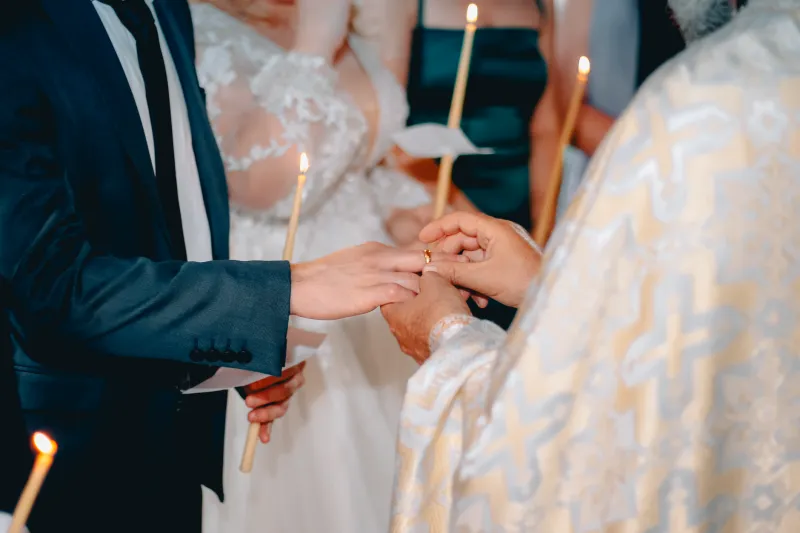
There is a quiet irony embedded in most wedding planning timelines. Couples will spend an entire Saturday afternoon debating the precise shade of ivory for table linens. They will schedule three separate tastings to arrive at the perfect appetizer. They will agonize over font choices for programs that guests will hold for twenty minutes before setting aside. And yet, when it comes to the ceremony itself—the ten to twenty minutes that legally, spiritually, and emotionally constitute the entire reason everyone gathered—preparation is frequently an afterthought.
This is not a criticism. It is simply an observation about where our culture has quietly redirected wedding energy. The ceremony is assumed to take care of itself. You show up, someone reads words, you say "I do," and it is finished. But for couples who have worked with a professional coordinator and reflected honestly on their day afterward, the ceremony is almost always cited as the moment that mattered most—and the moment they wish they had prepared for more deliberately.
The good news is that this imbalance is entirely correctable, and correcting it does not require a dramatic overhaul of your planning process. It requires a shift in perspective.
The Planning Asymmetry No One Talks About
Consider the average timeline of wedding preparation. Venue selection begins twelve to eighteen months out. Catering contracts are signed nine to twelve months in advance. Florals, photography, attire, and music are typically secured within the first year. These are substantial investments of both money and mental energy, and they are entirely appropriate given what each element contributes to the day.
Now consider when most couples first sit down to seriously think about their vows. In many cases, it is the week before the wedding. For some, it is the night before. The rehearsal—if it happens at all—focuses almost exclusively on logistics: who walks in first, where to stand, when to turn. The emotional architecture of the ceremony, the pacing, the language, the pauses that allow guests to actually absorb what is happening, receives almost no dedicated attention.
This asymmetry is understandable. Vows feel deeply personal, which can make early preparation feel presumptuous or artificial. But that reasoning, while emotionally intuitive, is practically counterproductive. The most meaningful words you will ever speak in public deserve more than a late-night drafting session fueled by anxiety and exhaustion.
Vows Are Not a Performance—They Are a Promise
One of the most common mistakes couples make when approaching their vows is treating them as a performance to be delivered rather than a promise to be communicated. The distinction matters enormously.
When vows are treated as performance, the goal becomes not stumbling over words, not crying too visibly, and not losing one's place. The focus turns inward and self-conscious. When vows are treated as genuine communication—words spoken directly to another person with the intention of being truly heard—something entirely different happens. The couple connects with each other rather than managing their own nerves, and that connection is palpable to every guest in the room.
Achieving this requires practice, not in the theatrical sense, but in the conversational sense. Read your vows aloud, repeatedly, until the words feel like your own voice rather than a script. Better still, practice making eye contact while speaking them. The physical act of looking at your partner while saying something vulnerable is far more demanding than most people anticipate, and rehearsing it privately makes it infinitely more natural when the moment arrives.
Crafting Language That Actually Sounds Like You
If you have chosen to write personal vows—a decision that can elevate a ceremony considerably—the language itself warrants careful thought. The most resonant vows are rarely the most elaborate. They are specific, honest, and grounded in the actual texture of your relationship.
Generic declarations of eternal devotion are moving in theory but forgettable in practice. What your partner and your guests will remember are the specific details: the reference to the particular way you handle conflict, the acknowledgment of a shared difficulty you navigated together, the promise that reflects something only the two of you would recognize as significant. Specificity creates intimacy, and intimacy is what transforms a ceremony from a formal procedure into a genuine rite of passage.
If the prospect of writing your own vows feels overwhelming, consider working with your officiant. A skilled officiant can help you identify the language that feels authentically yours, structure it effectively, and ensure the overall ceremony has a coherent emotional arc rather than a series of disconnected elements.
The Overlooked Architecture of Ceremony Pacing
Beyond the vows themselves, the pacing of a ceremony deserves far more deliberate attention than it typically receives. Most ceremony programs are structured around a list of components: processional, welcome, readings, vows, ring exchange, pronouncement, recessional. What is rarely considered is the breathing room between those components.
Pauses are not empty space. They are the moments when guests absorb what they have just witnessed. A reading delivered beautifully and then immediately followed by the next element gives the audience no time to feel it. A vow spoken with genuine emotion, followed by a brief, unhurried silence, lands with an entirely different weight.
Discuss pacing with your officiant well in advance of the wedding day. Share which moments feel most significant to you and ask that those moments be given room to exist fully before the ceremony moves on. This kind of intentional structuring is rarely considered during planning, yet it is consistently what separates ceremonies that feel rushed and procedural from those that feel genuinely meaningful.
Making Space for Real Connection
Finally, consider how the ceremony itself can be designed to facilitate actual connection rather than polished presentation. This might mean choosing a ceremony length that allows for depth without exhausting guests. It might mean selecting readings that reflect your values rather than simply sounding beautiful in isolation. It might mean resisting the urge to fill every moment with music or movement and allowing some stillness instead.
At Matt Edge Weddings, the guidance we offer couples consistently returns to a single question: what do you want to feel when you look back on this day? For nearly every couple, the answer centers on the ceremony—on the moment they faced each other and made a promise. That moment deserves the same devotion, the same creative energy, and the same professional care that has been lavished on every other element of the celebration.
The flowers will be photographed. The food will be savored. The music will be remembered. But the ceremony is the reason all of it exists, and it is the only part of the day that genuinely cannot be recreated if it falls short. Invest in it accordingly.