Rooted in Values: How to Build a Beautiful Wedding With a Lighter Environmental Footprint
The average American wedding generates a remarkable amount of waste. Single-use décor, imported floral arrangements, disposable tableware, and food that never reaches a plate add up to an environmental toll that many couples are no longer willing to accept quietly. At the same time, the desire for a beautiful, meaningful celebration has not diminished. If anything, today's couples are more attuned to the relationship between how they celebrate and what they stand for.
The good news is that sustainability and elegance are not opposing forces. They are, in fact, deeply compatible — and the process of designing an environmentally thoughtful wedding often produces something more personal, more considered, and more genuinely beautiful than the default approach. At Matt Edge Weddings, we have guided couples through this process many times, and the results consistently reflect a clarity of intention that elevates every design choice.
Start With the Honest Inventory
Before making any vendor call or design decision, it is worth sitting with a fundamental question: where does your wedding's environmental impact actually come from?
For most couples, the answer falls into a few key categories. Floral design is often the largest single contributor to waste, particularly when arrangements incorporate non-local, chemically treated blooms that are discarded after a single evening. Catering generates significant food waste when portions are overestimated or dietary needs are under-considered. Printed materials — programs, menus, escort cards, signage — pile up on chairs and tables and largely end up in landfills by midnight. And transportation, particularly for destination weddings or events that require significant guest travel, carries a carbon footprint that is easy to overlook.
Not every couple will choose to address all of these areas equally. What matters is that the choices are made consciously, with a clear sense of where your values are concentrated and where reasonable trade-offs exist.
Sustainable Floral Design: More Beautiful Than You Might Expect
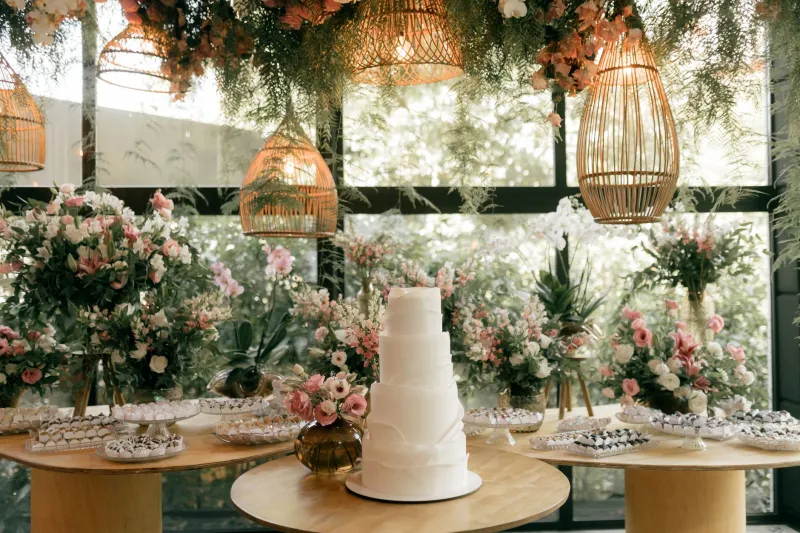
The floral industry is undergoing a quiet transformation, and couples planning weddings today have access to options that simply did not exist a decade ago. Locally grown, seasonally appropriate flowers sourced from domestic farms reduce both transportation emissions and chemical dependency. Many American flower farms now offer direct-to-event programs that connect couples with growers in their region, producing arrangements that reflect the actual landscape of the season rather than a generic tropical palette.
Dried and preserved florals have also experienced a genuine design renaissance. Far from the dusty arrangements of decades past, contemporary dried installations — pampas grass, preserved eucalyptus, dried citrus — offer a warmth and texture that fresh flowers cannot replicate and that last well beyond the wedding day itself.
For couples committed to fresh arrangements, working with a florist who practices intentional sourcing and partners with organizations like Random Acts of Flowers or Repeat Roses — both of which redistribute wedding flowers to hospitals, hospices, and care facilities — ensures that the beauty of the evening extends meaningfully beyond it.
The Vendor Conversation You Need to Have Early
Sustainability-minded couples sometimes hesitate to raise their values with vendors, uncertain whether it will complicate the relationship or narrow their options. In practice, the opposite tends to be true. Vendors who share a commitment to environmental responsibility are usually eager to discuss it — and vendors who do not share that commitment are better identified early, before contracts are signed.
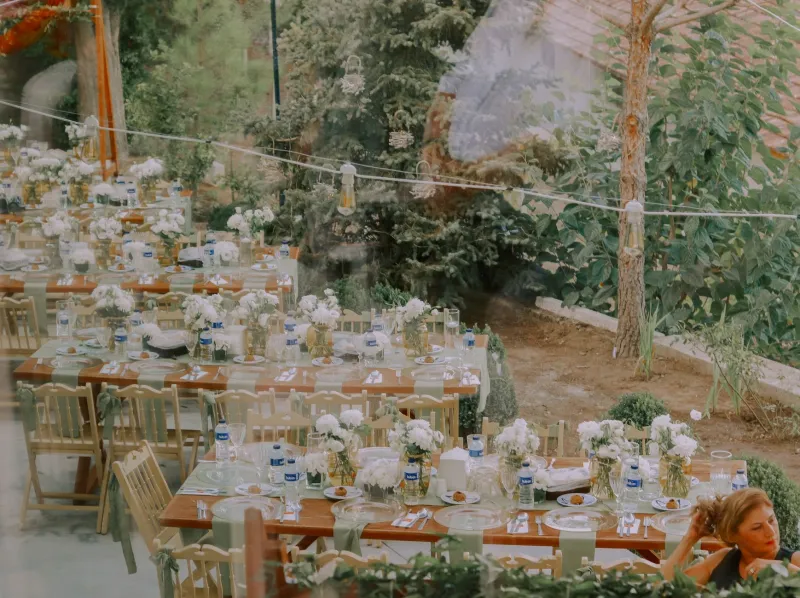
When interviewing caterers, ask specifically about their food sourcing practices, their approach to portion estimation, and what happens to surplus food after the event. Many experienced catering teams have established relationships with local food banks or composting services. When speaking with rental companies, inquire about their inventory's composition — quality linen and tableware rentals are inherently more sustainable than disposable alternatives, and most rental companies are happy to make that case.
For stationery, the conversation is straightforward: digital invitations and RSVP management have become genuinely elegant, and for couples who prefer physical paper goods, vendors working with recycled stock or seed paper (which guests can plant after the event) offer beautiful options that carry no guilt.
Navigating Family Expectations With Grace
For many eco-conscious couples, the most delicate challenge is not the vendor selection — it is the family conversation. Parents and in-laws who have imagined a traditional wedding for years may not immediately understand why the centerpieces are potted herbs rather than imported roses, or why the menu is centered on locally raised proteins rather than the surf-and-turf they expected.
The most effective approach here is not to lead with environmental argument, but with design intention. When you explain that the centerpieces are potted herbs because they will be given to guests to take home, the sustainability dimension is embedded in a gesture of generosity. When you describe the farm-to-table menu as a reflection of the region where you are celebrating, it sounds like a thoughtful tribute rather than a political statement.
In most cases, family members who initially resist sustainable choices come to appreciate them once they understand the reasoning and experience the results. A wedding that feels intentional, personal, and rooted in the couple's actual values tends to resonate with guests across generations — because authenticity is universally recognizable.
Design Choices That Do Double Duty
Some of the most sustainable wedding decisions are also among the most design-forward. Consider a few examples.
Renting or borrowing attire — including the wedding dress — has become significantly more mainstream and more logistically accessible in the United States over the past several years. Platforms like Stillwhite and BHLDN's rental program offer designer options at accessible price points. The environmental case is strong; the financial case is equally compelling.
Using living plants as ceremony and reception décor — potted olive trees, ferns, small citrus trees — creates an atmosphere of lush, organic beauty that photographs extraordinarily well and can be replanted, donated, or repurposed after the event.
Digital wedding websites, which the majority of couples now use regardless of environmental motivation, eliminate the need for a significant volume of printed correspondence. Channeling the savings toward higher-quality invitations for a smaller guest list is one way to preserve the tactile experience of paper while reducing overall waste.
The Lasting Impression
A values-driven wedding does something that a purely aesthetic wedding cannot: it gives guests something to reflect on beyond the visual. When your celebration is visibly rooted in your convictions — in your relationship to the land, to your community, to the future you are building together — it communicates something about who you are as a couple that no color palette or floral arrangement can fully express.
Beauty, at its deepest level, is never merely decorative. It is the outward expression of something inward. A wedding designed around what you genuinely believe tends to be more beautiful, not less — and the memory it creates is proportionally more lasting.