Finding Common Ground: A Couple's Guide to Navigating Honest Disagreements About Your Wedding

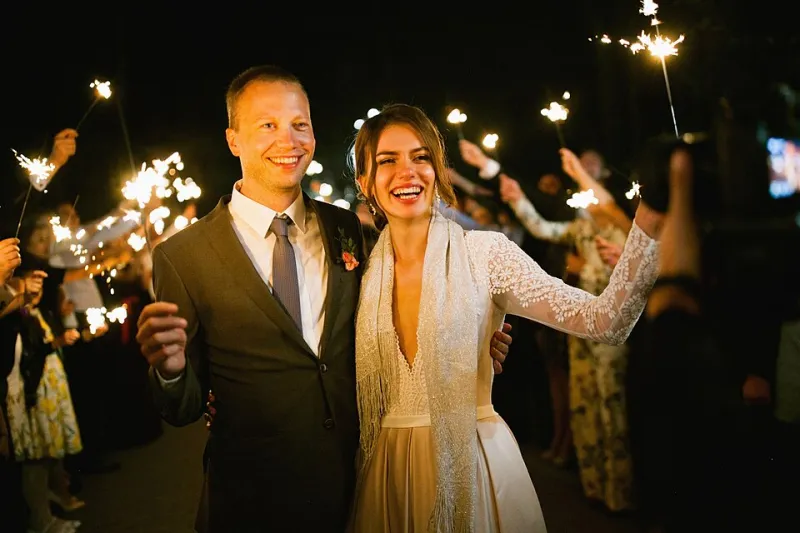
Photo by Photo by Matheus Câmara da Silva on Unsplash on Unsplash
Wedding planning is, among other things, a sustained exercise in shared decision-making under pressure. For many couples, it is also the first time they have had to negotiate something this significant together—something with real financial stakes, deep family implications, and a public dimension that makes every choice feel consequential.
It should not be surprising, then, that disagreements arise. What surprises many couples is the nature of those disagreements. They are rarely about centerpiece styles or cocktail hour music. They are about values: who matters, what matters, how much, and why. A disagreement about guest list size is often a disagreement about family obligation versus intimacy. A disagreement about budget allocation is often a disagreement about what this day is fundamentally for. A disagreement about religious ceremony elements is often a disagreement about identity, heritage, and what you want to declare publicly about who you are.
These conversations are harder than choosing a venue. They are also more important. Here is how to have them well.
Name the Actual Disagreement
The first and most essential step is to resist the temptation to argue about the surface issue when the real disagreement lies underneath.
Consider a common scenario: one partner wants 200 guests; the other wants 60. The surface argument is about headcount. But if you stay at the surface, you will spend hours negotiating a number without ever resolving the underlying tension. Why does one partner want 200 guests? Perhaps they come from a large, close-knit family where a small wedding would read as exclusion—even insult. Why does the other want 60? Perhaps they feel deeply that the ceremony should be an intimate experience, and a large crowd feels performative rather than personal.
Those are not the same disagreement. And the solution is not simply to split the difference at 130.
Before any negotiation, both partners should spend time—separately, if needed—articulating what they actually want and, more importantly, why they want it. Written reflection can be more useful than spoken conversation at this stage, because it removes the pressure of real-time response and allows each person to reach the honest version of their position.
Separate the Non-Negotiables From the Preferences
Not every wedding element carries equal emotional weight, and one of the most clarifying exercises a couple can do is to sort their priorities explicitly.
Ask each partner to independently categorize every significant wedding element into three groups:
- Non-negotiable — This matters deeply to me, and I would feel genuinely diminished if it were absent.
- Important, but flexible — I care about this, but I can adapt if we find a solution that honors the spirit of what I want.
- Preference, not priority — I have an opinion, but I can let this go entirely if it serves our overall vision.
When both lists are complete, compare them. You will almost certainly find that your non-negotiables do not fully overlap—and that is valuable information. It means that in many areas, one partner's strong preference is actually facing the other partner's flexible position. That is not a conflict; that is a natural resolution waiting to happen.
The genuinely difficult conversations are the ones where both partners have placed the same element in the non-negotiable column with opposing visions. Those deserve more time, more care, and possibly the help of a neutral third party.
Approach Budget Disagreements as Values Conversations
Few areas of wedding planning generate more sustained tension than budget allocation, and the reason is straightforward: money represents values. How a couple chooses to spend their wedding budget is a direct expression of what they believe this day is fundamentally for.
A partner who wants to allocate the largest share of the budget to photography is saying: the lasting record of this day matters most to me. A partner who wants to prioritize the guest experience—food, music, atmosphere—is saying: the way our people feel in that room is what I care about most. Neither position is wrong. But if those priorities are not named explicitly, the budget conversation becomes a negotiation about numbers rather than a conversation about meaning.
Try this: before discussing any specific dollar amounts, each partner writes a single paragraph describing what they most want guests—and the couple themselves—to experience on the wedding day. Then compare those paragraphs. The budget priorities that align with both visions will become immediately clearer. The areas of genuine tension will also become clearer, which is exactly where the real conversation needs to happen.
When Religion and Cultural Identity Enter the Room
Disagreements about religious ceremony elements are among the most emotionally complex that couples face, because they touch identity at a level that is difficult to articulate and even harder to compromise on.
For interfaith couples, or couples where one partner practices and one does not, the question of how—or whether—to incorporate religious elements into the ceremony can carry enormous weight. Family expectations compound the difficulty. A partner whose parents have attended the same church for forty years may feel that a secular ceremony is a quiet rejection of everything their family holds sacred. Their partner, raised without religious practice, may feel that incorporating elements they do not believe in is a form of performance that dishonors the ceremony's integrity.
Both feelings are legitimate. The path through them is not a compromise that leaves both partners feeling half-satisfied. It is a deeper conversation about what each partner is actually asking for.
In many cases, what the religious partner wants is not a specific liturgical structure—it is acknowledgment. Acknowledgment that their faith is part of who they are and that their wedding day can honor that without demanding their partner adopt beliefs they do not hold. That acknowledgment can often be expressed in ways that feel genuine to both people: a blessing from a family member, a reading with personal resonance, a moment of intentional silence. The specifics matter less than the sincerity.
The Role of a Neutral Perspective
Some disagreements benefit from outside perspective—not to adjudicate, but to help both partners hear each other more clearly. A skilled wedding planner or coordinator can serve this function, not as a mediator in the therapeutic sense, but as an experienced professional who has witnessed these conversations many times and can offer frameworks that help couples move forward.
If conversations about a particular wedding element repeatedly end in frustration, consider setting that topic aside temporarily and returning to it with fresh eyes—or with a third perspective in the room. The goal is never for one partner to win. It is for both partners to arrive at decisions they can stand behind honestly, without resentment and without the nagging sense that they conceded something essential.
What You Are Really Building
Every disagreement you navigate well during wedding planning is a rehearsal for the partnership you are about to formally begin. The couples who emerge from this process with their relationship intact—and often strengthened—are not the ones who avoided conflict. They are the ones who engaged with it honestly, named what actually mattered, and found solutions that honored both people rather than simply splitting the difference.
Your wedding should reflect both of you. Not one of you, not a negotiated average, but the genuine overlap of two people who have done the work of understanding each other. That is worth the difficult conversation. Every time.