A Celebration for Every Guest: Designing a Reception That Welcomes All Social Temperaments
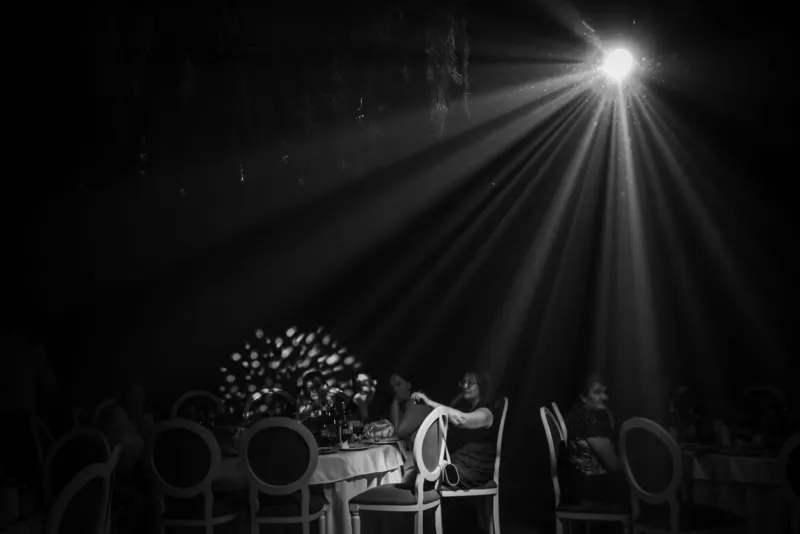
Wedding receptions, at their finest, are acts of hospitality. They are an invitation extended to the people who matter most in a couple's life — an invitation not merely to witness, but to genuinely participate in the joy of the occasion. And yet, for a significant portion of guests, the standard reception format can feel quietly overwhelming: the unbroken noise, the expectation of constant sociability, the absence of any place to simply be without performing.
This is not a niche concern. Roughly half of the American population identifies with introverted tendencies, meaning that in any room of two hundred guests, a hundred of them may be quietly managing their social energy rather than freely expending it. Designing a reception that acknowledges this reality is not a concession to sensitivity — it is an expression of genuine care for the people you've chosen to celebrate with.
Understanding the Spectrum, Not the Stereotype
Before exploring design strategies, it is worth setting aside the popular caricature of introversion. Introverted guests are not antisocial, anxious, or disengaged. They are not hoping to leave early or avoid conversation. They simply draw energy differently than their extroverted counterparts, and they require environments that allow for natural regulation of social intensity.
An extroverted guest thrives in the open floor, moves fluidly between tables, and grows more energized as the room grows louder. An introverted guest may deeply cherish the wedding and the couple, yet find that same environment gradually depleting rather than invigorating. Without thoughtful design accommodations, that depletion accumulates quietly over the course of an evening — producing not dramatic exits, but a kind of subdued presence that is the opposite of the full participation you've hoped to inspire.
The good news is that the design adjustments required to serve introverted guests do not diminish the experience for extroverted ones. They simply expand the range of ways that guests can authentically engage.
Table Configuration as Social Architecture
The standard round table of ten is a workhorse of the American wedding reception, and for good reason: it accommodates large guest counts efficiently and encourages group conversation. But it also creates a social dynamic in which quieter guests often find themselves on the periphery of conversations they cannot easily enter.
Consider diversifying your seating configuration. A mix of table sizes — rounds of eight alongside smaller tables of four or six — gives guests more intimate settings that naturally facilitate one-on-one and small-group conversation. Rectangular farm tables, increasingly popular in contemporary American weddings, can be particularly effective: they create a linear conversation structure that allows guests to engage meaningfully with the two or three people nearest them without the pressure of performing for an entire table.
Seating assignment strategy matters as well. Rather than defaulting to strict groupings by social circle, consider intentional cross-pollination — placing guests who share a specific interest or connection across social groups at the same table. A shared point of genuine connection gives quieter guests a natural entry point into conversation, removing the social labor of finding common ground from scratch.
Designing Space for Recovery
Every thoughtfully designed event space includes what hospitality professionals sometimes call a "soft landing" — an area that offers a lower-stimulus environment without removing guests from the celebration entirely.
This need not be elaborate. A lounge area set slightly apart from the main reception floor, furnished with comfortable seating and softer lighting, gives guests a place to decompress between dances, step away from the ambient noise, and have quieter conversations that the main floor simply cannot accommodate. A well-placed outdoor terrace or garden area serves the same function in warmer months.
The key is intentionality. When these spaces are designed as genuine amenities rather than afterthoughts, they signal to guests that the couple has considered their comfort — and that signal alone creates a more welcoming atmosphere for everyone.
Noise, Music, and the Acoustics of Inclusion
One of the most common sources of guest fatigue at receptions is sustained high volume. When ambient music competes with conversation across the entire duration of the event, guests who want to connect meaningfully with one another face a persistent obstacle — and those with lower noise tolerance may find the cumulative effect genuinely exhausting.
Work with your band or DJ to establish a dynamic arc for the evening's sound levels. Dinner service is typically an ideal window for lower-volume background music that facilitates table conversation. As the evening progresses toward dancing and toasts, volume can rise naturally. This ebb and flow mirrors the organic rhythm of a well-paced gathering and gives guests implicit permission to move between high-energy and lower-energy modes throughout the night.
If your venue permits it, designating a room or area with minimal amplification — perhaps where the dessert station or late-night snacks are placed — creates a natural gathering point for guests who want continued conversation in a quieter register.
Programming That Invites Rather Than Demands Participation
Interactive reception elements — photo booths, lawn games, group dances — are wonderful additions to a celebration, provided they are framed as invitations rather than obligations. The difference in framing is subtle but significant.
A photo booth placed in a high-traffic area with a small, approachable attendant becomes a natural gathering point. The same booth positioned at the end of a long hallway with a line and a time pressure becomes a social obligation. Similarly, group dances like the Electric Slide or a Cupid Shuffle are beloved traditions precisely because participation is visible and collective — but they can feel like unwelcome spotlights for guests who prefer not to be in them. Ensuring that ample seating remains available during these moments, and that the dance floor is never the only active space in the room, gives all guests a comfortable choice.
The Deepest Form of Hospitality
When a couple designs their reception with genuine attention to the full range of their guests' needs, something remarkable happens: the celebration becomes more itself, not less. The energy in the room is more authentic because it is freely given rather than socially coerced. Conversations go deeper because there is space for depth. Guests who might otherwise have spent the evening managing their discomfort instead find themselves fully present — and that presence, multiplied across a room full of people who love you, is what transforms a reception from a well-executed event into an experience worth carrying for a lifetime.