What the Walls Already Know: Reading a Venue's Emotional Architecture Before You Sign
There is a moment that happens at nearly every venue tour. A couple steps through the doors, looks around, and says, I just feel something here. They cannot always name it. They cannot always explain it. But the feeling is real, and it is not accidental.
Physical spaces communicate long before words do. The height of a ceiling, the direction a window faces, the way sound moves through a room—these are not merely aesthetic details. They are architectural forces that quietly govern how your guests will feel, how freely they will move, and how deeply they will be present during the most significant moments of your day. Choosing a venue without understanding this language is like hiring a co-planner you have never met and trusting them to make decisions without your input.
At Matt Edge Weddings, we work with couples to look beyond the obvious beauty of a space and ask a more precise question: What will this room do to the people inside it?
Ceiling Height and the Psychology of Ceremony
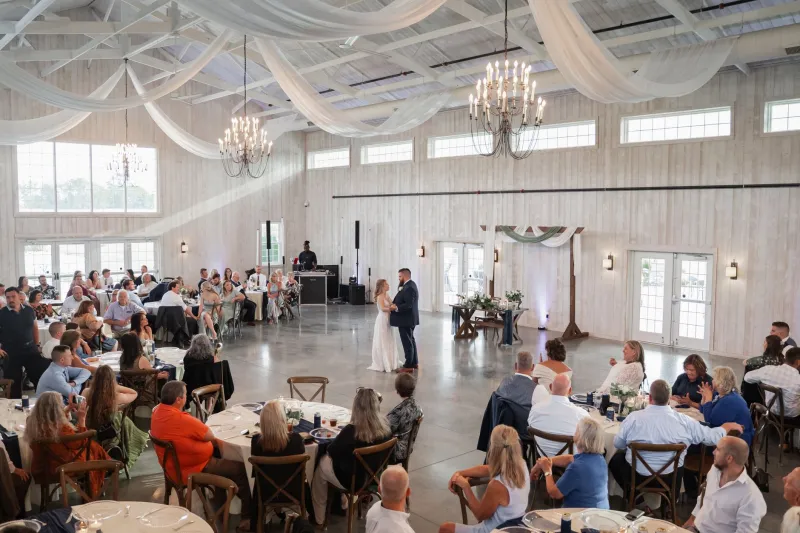
Few architectural variables carry more emotional weight than vertical space. Rooms with soaring ceilings—cathedral vaults, converted industrial lofts, grand ballrooms—naturally encourage a sense of reverence and occasion. There is a reason that houses of worship have been built tall for centuries. Height signals significance. It lifts the gaze and, with it, the spirit.
This matters enormously for ceremony. A low-ceilinged room can feel intimate, even cozy, but it can also compress the emotional register of the moment. Your vows deserve room to breathe. If the space you are considering for your ceremony feels more like a conference room than a sanctuary, pay attention to that instinct. It is not superficiality—it is architectural psychology at work.
Conversely, an extremely vast space can dwarf a smaller guest list, making a gathering of 80 people feel sparse and disconnected. The goal is proportional resonance: a room whose scale amplifies your gathering rather than diminishing it.
Natural Light as an Emotional Director
Professional photographers speak about light in technical terms, but light does something far more fundamental than flatter photographs. It orients people emotionally. Warm, directional afternoon light streaming through west-facing windows during a golden-hour reception creates a sense of warmth and ease that no amount of uplighting can fully replicate. Morning light in a ceremony space can feel clean and hopeful. Diffuse, overcast light through skylights softens a room and encourages quiet conversation.
When touring a venue, note the time of day and try to revisit at the hour your event would actually take place. A ballroom that glows beautifully at noon may feel cavernous and fluorescent at seven in the evening. Ask venue coordinators how the space is typically lit during evening events, and ask to see photographs taken during actual celebrations rather than staged shoots.
Light is not just a visual consideration. It is a mood-setter that will influence whether your guests linger at cocktail hour or drift toward the exit, whether the dance floor feels electric or exposed.
Acoustics and the Quality of Human Connection
One of the most underappreciated elements of venue selection is sound. Acoustics determine whether your guests can actually hear one another speak—and this matters more than almost any other detail during cocktail hour and dinner.
Hard surfaces—concrete floors, glass walls, exposed brick—reflect sound, creating reverb and ambient noise that builds quickly as a room fills. When guests cannot hear one another comfortably, they unconsciously disengage. Conversation becomes effortful. The warmth of human connection that you are trying to facilitate gets swallowed by noise.
Softer materials—carpet, upholstered seating, drapery, acoustic panels—absorb sound and create an environment where people can lean in, laugh freely, and connect without strain. If you are considering a venue with predominantly hard surfaces, ask whether sound management measures are part of their standard setup, or whether that is an additional cost you would need to plan for.
During your tour, clap your hands in the center of the room and listen. Pay attention to how long the echo sustains. Walk to the far corner and have your partner speak to you in a normal voice. These small tests reveal a great deal.
Sightlines and the Architecture of Shared Experience
A wedding is, at its heart, a communal act of witnessing. Every guest present has come to see you—to watch you make a promise, to share in your joy, to be part of a story that matters. Sightlines determine whether that witnessing is actually possible.
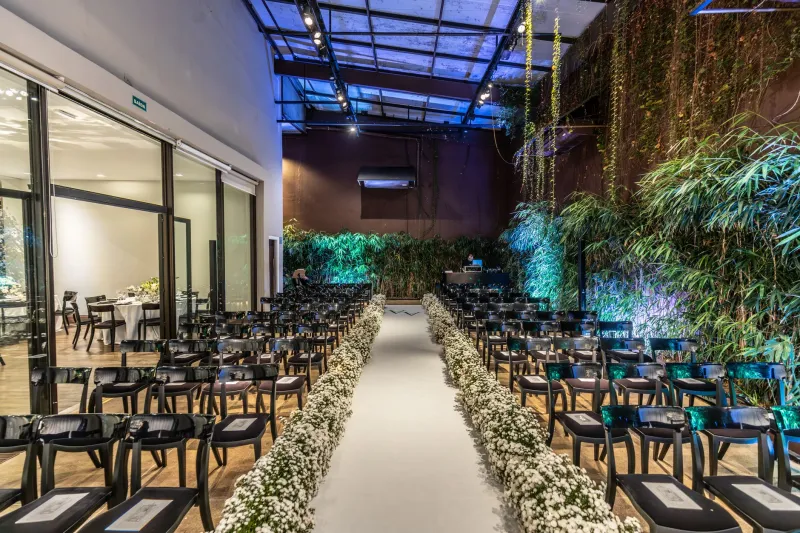
In ceremony spaces, consider whether every seat in the room has a clear view of the altar or focal point. Columns, low-hanging chandeliers, and awkward room configurations can leave guests in the back rows feeling excluded from the very moment they came to witness. During a venue tour, sit in the chairs at the back and sides. What do you actually see?
For reception spaces, consider how the room's layout will affect the energy of the evening. A long, narrow room with the dance floor at one end naturally creates a divide between those who are dancing and those who are seated. A centrally positioned dance floor invites more guests into the energy of the room even if they never leave their seats.
Flow, Transition, and the Invisible Architecture of Movement
Beyond any single room, consider how your guests will move through the venue across the arc of the day. The path from ceremony space to cocktail area, from cocktail area to reception room—these transitions are opportunities to build anticipation, or they are logistical dead zones that drain energy from your celebration.
The best venues choreograph movement intuitively. A hallway that opens unexpectedly into a stunning terrace. A staircase descent into a reception room that creates a natural moment of arrival. These are not accidents of design. They are architectural gifts that a skilled planner can use deliberately.
Conversely, a venue where guests must navigate confusing corridors, pass through service areas, or wait in undefined spaces between events will create low-grade friction that accumulates throughout the day.
Choosing With Intention
The most important shift a couple can make during the venue selection process is to stop asking only Does this space look beautiful? and start asking What will this space do to the people we love most?
A venue is not a backdrop. It is a participant in your wedding day—one that arrived before any vendor, before any guest, before the two of you. It will shape the emotional arc of your celebration in ways that no amount of décor can fully override.
Choose a space that already knows what it wants to say. Then work with it, rather than against it, to craft something genuinely extraordinary.