Held in the Heart: Graceful Ways to Carry Absent Loved Ones Into Your Wedding Day
There is an old truth that every wedding planner eventually learns to hold gently: joy and grief are not opposites. They are, more often than not, companions. The most luminous wedding days tend to carry within them a quiet awareness of those who are missing from the room—a grandmother whose laugh would have filled the reception hall, a childhood friend whose illness made travel impossible, a parent whose relationship with the couple has grown complicated by years and circumstance.
Acknowledging these absences is not a concession to sadness. Done thoughtfully, it is one of the most profound acts of love a couple can offer—both to themselves and to the guests who share that unspoken awareness. The challenge lies in finding the balance: honoring memory without allowing the weight of absence to overshadow the celebration unfolding in real time.
What follows are meaningful, considered approaches to carrying absent loved ones into your wedding day—approaches that speak to the full range of circumstances that keep people apart.
Understanding the Spectrum of Absence
Before exploring specific gestures, it is worth acknowledging that absence arrives in many forms, each carrying its own emotional texture.
The loss of someone who has passed away is the most commonly addressed in wedding planning conversations. But couples also navigate the absence of loved ones who are living—those whose health prevents travel, those separated by geography or immigration status, those estranged through painful family history, and those whose relationship with the couple has simply become too complicated to include. Each situation deserves its own sensitivity, and the approaches that feel right will vary accordingly.
A gesture that beautifully honors a deceased grandparent may feel inappropriate when the absent person is a living estranged parent. Clarity about who you are honoring, and why, is the first step toward choosing gestures that feel authentic rather than performative.
Subtle Symbolism Woven Into the Design
Some of the most enduring tributes are the ones guests may not immediately notice—details embedded quietly into the visual fabric of the day.
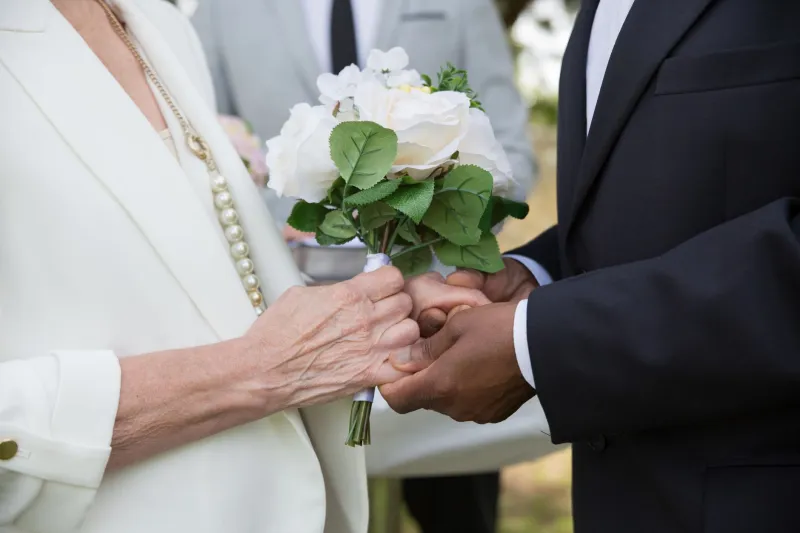
A single bloom from a loved one's garden, worked into the bridal bouquet or a centerpiece arrangement, carries enormous meaning without requiring explanation. A piece of a departed family member's clothing—repurposed as a bouquet wrap, a pocket square, or a small patch sewn inside a wedding gown—creates an intimate point of contact between past and present. A charm attached to a bouquet stem, a ring worn on a chain beneath a dress, or a cufflink passed down through generations all serve as private anchors of remembrance.
For couples honoring someone whose absence is circumstantial rather than permanent—a beloved aunt recovering from surgery, a sibling stationed overseas—these same gestures work beautifully, transformed from memorial to connection. The object becomes a thread between two people who cannot share the same room.
A Reserved Seat, Reimagined
The tradition of leaving an empty chair with a framed photograph has long been a fixture at weddings honoring those who have passed. While meaningful to many families, it can also concentrate grief into a single, highly visible point during the ceremony—which may not align with every couple's intentions for the day.
A softer interpretation is worth considering. A small arrangement of flowers placed at the end of a pew, a reserved seat card bearing a name without the accompanying photograph, or a single candle lit quietly before guests arrive can acknowledge presence without creating a focal point that draws sustained attention. The gesture becomes felt rather than announced.
For couples honoring a living person who could not attend, a dedicated seat near family—left open with a simple note or a small personal object—communicates inclusion without requiring explanation to every guest who passes by.
Words That Carry Weight
Ceremony language offers one of the most meaningful opportunities to honor absence, provided it is handled with care and proportionality.
A brief, warm acknowledgment from an officiant—something along the lines of noting that love extends beyond the walls of any single room—can create space for grief without dwelling in it. The key is brevity and warmth. A sentence or two, woven naturally into the ceremony's opening or closing, lands very differently than an extended memorial passage that shifts the emotional register of the entire service.
For couples who have lost someone central to their story, incorporating a meaningful reading, poem, or piece of music associated with that person can be deeply moving. The tribute lives within the ceremony's rhythm rather than interrupting it.
When the absence involves a living person—particularly in situations involving estrangement or family complexity—spoken acknowledgment during the ceremony is generally best avoided. The privacy of a handwritten letter, delivered before or after the wedding day, often carries more genuine weight than a public gesture that may feel ambiguous or uncomfortable to those in attendance.
Personal Rituals That Belong Only to You
Not every tribute needs to be visible to your guests. Some of the most profound moments of remembrance on a wedding day happen privately, away from the ceremony and reception entirely.
A quiet visit to a loved one's grave on the morning of the wedding, a phone or video call with someone who could not travel, a moment of stillness in a location that held meaning for a relationship that has since grown distant—these are acts of devotion that belong entirely to the couple. They do not require an audience to carry meaning.
For couples separated from guests by distance, technology has created genuinely beautiful possibilities. A loved one joining the ceremony via livestream, contributing a recorded video message played during the reception, or participating in a first look or getting-ready moment through a video call can transform what might have been a painful absence into an unexpected point of connection.
Carrying Memory Without Being Consumed by It
The most important counsel any wedding professional can offer on this subject is also the simplest: honor the absence, then return to the present.
Grief does not require the whole day. Neither does love, in its most generous form, ask you to sacrifice your joy in order to prove its depth. The most graceful tributes are those that acknowledge what is missing, hold it briefly and tenderly, and then release the couple back into the fullness of the celebration surrounding them.
Your wedding day will not be less meaningful because it carries sorrow alongside joy. In many ways, it will be more so. The people you are honoring—whether they have passed, whether they are watching from afar, or whether the relationship has simply taken a shape neither of you anticipated—are part of the story you carry into your marriage. They do not need to be the story itself.
At Matt Edge Weddings, we believe that truly timeless celebrations are built on emotional honesty. Helping couples navigate the tender complexities of absence and remembrance is not a footnote to the planning process—it is, for many families, one of its most important chapters. We are honored to walk through it alongside you.