When the Room Is Full: Designing Personal Connection Into a Large-Scale Wedding Celebration
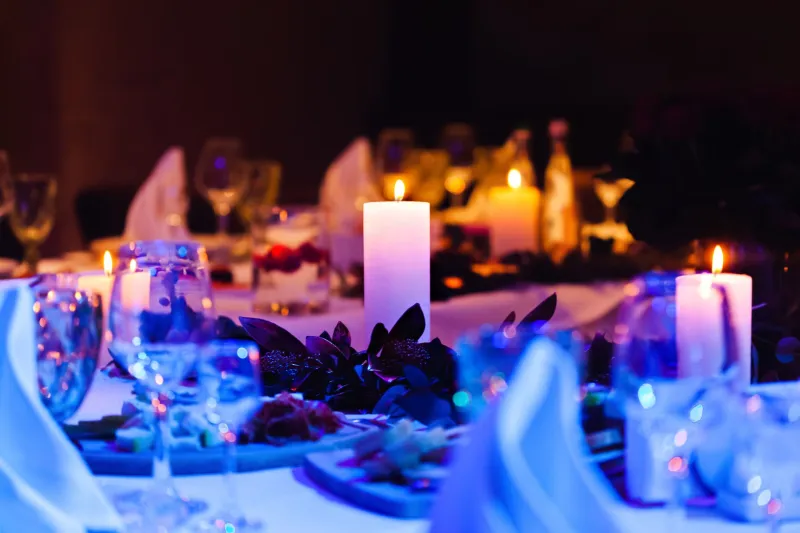
There is a particular tension that many couples encounter as their wedding guest list grows beyond what they originally imagined. What began as a vision of an intimate gathering—perhaps fifty people seated around candlelit tables, every face familiar, every conversation unhurried—gradually expands under the weight of family obligations, professional relationships, and the quiet social math of invitation reciprocity. By the time the final count arrives, the number on the page can feel like a stranger.
The instinct, understandably, is to mourn the intimacy that seems to have been traded away. But that instinct, however natural, rests on a flawed premise: that scale and emotional depth are mutually exclusive. They are not. What a larger wedding requires is not resignation but rather strategy—a deliberate, thoughtful architecture of moments that ensures no guest feels like a face in a crowd and no couple feels like performers on a distant stage.
Reframing What Intimacy Actually Means
Before exploring practical solutions, it is worth examining the assumption itself. Intimacy at a wedding is not simply a function of headcount. It is a function of presence—of whether the people in the room feel genuinely seen and whether the couple feels genuinely connected to the occasion unfolding around them.
Some of the most emotionally resonant weddings on record have taken place in large venues with hundreds of guests. Conversely, some of the most disconnected celebrations have involved fewer than seventy-five people. The difference lies not in the number of chairs but in the intentionality behind how the day is designed.
With that reframing in place, the path forward becomes considerably clearer.
The Strategic Architecture of Seating
Seating is perhaps the most underestimated tool available to couples planning a large wedding. Most couples approach it as a logistical puzzle—who cannot sit next to whom, which family clusters need to be separated, where to put the college friends who know no one else. These are legitimate concerns, but they address only the surface level of what seating can accomplish.
Consider instead designing your seating arrangement around conversation potential. Group guests not merely by existing relationship but by shared interest, shared stage of life, or shared values. A table of guests who have never met but who all share a passion for travel, a devotion to a particular sport, or careers in the same industry will generate a warmth and energy that feels organic rather than assigned. When guests are genuinely engaged with one another, they carry that energy into their interactions with you.
Beyond table composition, the physical layout of the room itself merits careful attention. Resist the temptation to fill every corner of a large venue simply because the space exists. Clusters of smaller seating areas—even within a grand ballroom—create visual and acoustic intimacy. Guests who feel enclosed in a manageable space rather than adrift in an expanse will naturally feel more present and more connected.
Micro-Moments That Carry Macro-Impact
One of the most effective strategies for maintaining personal connection across a large guest list is the deliberate creation of what might be called micro-moments: brief, intentional interactions that feel private even within a public celebration.
Handwritten notes placed at each guest's seat are one such mechanism. A single line—specific, personal, and unhurried—communicates to each individual that their presence was not assumed but genuinely anticipated. This need not be elaborate. A sentence recalling a shared memory, an expression of gratitude for a particular kindness, or simply an acknowledgment of what that person's friendship has meant carries extraordinary weight precisely because it is specific.
Similarly, the cocktail hour, often treated as a transitional interlude, can be restructured as an intentional connection window. Rather than circulating reactively—moving from greeting to greeting as guests approach—couples who work with an experienced coordinator can design a deliberate circuit of the room, moving table by table or cluster by cluster with brief but focused attention. The difference between a distracted hello and thirty seconds of genuine eye contact and engaged conversation is the difference between being recognized and being seen.
Ceremony Design That Speaks to Everyone
The ceremony itself offers remarkable opportunity for personalization at scale. Couples often assume that a ceremony accommodating two hundred guests must, by necessity, feel formal and impersonal. This is rarely true when the content of the ceremony is crafted with specificity.
Vows that reference real moments—a specific conversation, a particular place, a memory that only those closest to the couple will recognize but that all guests will feel the authenticity of—create an atmosphere of genuine intimacy regardless of room size. When a couple speaks to each other with unmistakable specificity, the assembled guests become witnesses to something real rather than observers of something rehearsed.
Incorporating brief participatory elements—a moment of collective silence, a communal gesture, or a reading that invites the audience into the emotional landscape of the ceremony—also collapses the distance between the couple at the altar and the guests in the pews.
Reception Flow as Emotional Architecture
The pacing and structure of a reception can either reinforce or undermine the sense of connection a couple has worked to build. Long stretches of passive entertainment—extended band sets, prolonged video tributes, or speeches that run without clear time guidance—create distance. Guests become observers rather than participants, and the couple becomes a spectacle rather than a presence.
Alternatively, a reception designed with deliberate rhythm—alternating between structured moments and open social time, between collective experience and individual conversation—keeps guests emotionally engaged throughout the evening. Strategic placement of interactive elements, whether a curated photo station, a dessert experience that invites guests to gather and converse, or a late-evening dance set that draws even reluctant guests to the floor, ensures that the celebration feels alive and participatory rather than simply witnessed.
The Coordinator's Role in Holding It All Together
It would be incomplete to discuss any of these strategies without acknowledging the essential role of professional coordination in executing them. The logistics of a large wedding are genuinely complex, and the cognitive load of managing those logistics in real time is incompatible with the emotional presence that intimacy requires.
An experienced wedding coordinator does not simply manage timelines and vendor communications. At their best, they serve as the structural backbone that allows a couple to remain fully present—to linger in a conversation, to notice a quiet moment, to be emotionally available to the people they love—because the operational demands of the day are being expertly handled elsewhere.
A large wedding, thoughtfully designed and professionally coordinated, need not sacrifice a single measure of warmth. The room may be full, but the heart of the celebration can remain entirely, unmistakably personal.